How Professional Traders Track Performance Metrics
Learn how professional traders track trading performance using metrics, dashboards and structured analysis.
What Is Trading Performance Tracking?
Trading performance tracking is the systematic process of recording, analyzing, and interpreting trade data. It helps traders evaluate strategy effectiveness, measure risk exposure, and identify areas for improvement. This data-driven approach focuses on objective metrics rather than intuition to enhance decision-making and achieve consistent profitability. It's the foundation upon which professional traders build and refine their edge.
Trading as a Business: The Role of Data
The most successful traders in the world do not think of trading as a hobby or a side hustle. They treat it as a business. And like any business, **trading performance tracking** is the backbone of decision-making, growth, and long-term survival.
A retail trader might glance at their profit and loss for the week and move on. A professional trader digs into dozens of data points, looking for patterns, inefficiencies, and areas of improvement. This analytical mindset is what separates consistently profitable traders from those who cycle between winning and losing streaks without understanding why.
🎸 Join RockstarTrader Free
RockstarTrader gives you 40+ professional trading tools in one platform — from journaling and performance analytics to risk calculators and market scanners. Everything you need to trade like a professional.
Get Started Free →If you want to trade like a professional, you need to track your performance like one. This guide breaks down the exact systems, metrics, and tools that professional traders use to monitor and improve their trading analytics.
**Featured Snippet:** Trading performance tracking is the systematic process of recording, analyzing, and interpreting trade data to evaluate strategy effectiveness, manage risk, and drive continuous improvement. Professionals rely on data rather than intuition to make decisions about their trading approach, position sizing, and strategy allocation.
**Trading performance tracking is the systematic process of recording, analyzing, and interpreting trade data to evaluate strategy effectiveness, manage risk, and drive continuous improvement.** Professionals rely on data rather than intuition to make decisions about their trading approach, position sizing, and strategy allocation.
Data plays several critical roles:
- **Removes bias** — Traders tend to remember wins and forget losses. Data provides an honest, objective picture of actual results. By meticulously logging every transaction, professionals gain an unbiased view of their performance, preventing emotional distortions from clouding their judgment.
- **Reveals hidden patterns** — You might perform better on Tuesdays, during London sessions, or on specific setups. Without data, these patterns remain invisible. For example, a trader might notice via their trading journal that trades taken on Friday afternoons during low liquidity consistently result in losses, prompting them to avoid trading during those times.
- **Validates strategy changes** — Before making adjustments, professionals compare before-and-after data to confirm the change actually helped. This rigorous testing approach ensures that any modification to a strategy is based on empirical evidence, not just a hunch.
- **Supports risk management** — Accurate tracking reveals whether risk management rules are being followed and whether they are working. This includes monitoring metrics such as position size relative to account equity and ensuring that stop-loss orders are executed as planned, preventing catastrophic losses.
Professional trading desks spend significant resources on analytics infrastructure because they understand that better data leads to better decisions. Individual traders who adopt the same philosophy gain a meaningful edge over those trading without structured performance tracking.
Key Performance Metrics Professional Traders Track
Professional traders monitor a comprehensive set of trading performance metrics that extend far beyond basic profit and loss:
- **Win rate** — Percentage of winning trades. Tracked weekly and monthly to spot trends. Professional traders know their baseline and investigate deviations. For instance, if a strategy typically has a 60% win rate and it drops to 40% for two consecutive weeks, it signals a need for investigation into market conditions or execution issues.
- **Risk-reward ratio** — Average gain per winning trade divided by average loss per losing trade. A ratio of 2:1 or higher is common among professionals. This metric, often calculated using a risk/reward calculator before entry, ensures that potential profits justify the potential losses.
- **Expectancy** — The average profit or loss per trade in risk units. Calculated as: (Win% × Avg Win) − (Loss% × Avg Loss). Positive expectancy confirms an edge exists. This is a critical metric because a high win rate with a poor risk-reward can still lead to a negative expectancy, indicating a losing strategy in the long run.
- **Profit factor** — Total gross profits divided by total gross losses. Values above 1.5 indicate a healthy strategy. A profit factor below 1 suggests the strategy is losing money.
- **Maximum drawdown** — The largest peak-to-trough decline. Professionals track this to ensure it stays within predefined limits. A high maximum drawdown can indicate excessive risk-taking, even if the overall account is profitable. Tools like a drawdown calculator help visualize this.
- **Sharpe ratio** — Return per unit of risk. Higher ratios indicate better risk-adjusted performance. It helps compare different strategies by accounting for the volatility of their returns.
- **Average R-multiple** — Profit and loss measured in units of initial risk. Normalizes results across different position sizes. For example, if a trade profits 2R, it means it returned twice the initial risk taken. This allows for clear performance comparison regardless of individual trade size.
- **Trade duration** — Average time in a trade. Helps identify whether trades are being held too long or closed too early. For example, a consistently short trade duration for winning trades might suggest being too quick to take profits, while long durations for losing trades could indicate holding onto hope rather than cutting losses.
- **Position Size** - The number of shares, contracts, or units traded per transaction. Professionals use a position size calculator to meticulously manage this, ensuring appropriate risk exposure on each trade based on account size and target risk percentage.
- **Commission and Fees** - Often overlooked by retail traders, professionals diligently track these costs. High frequency or short-term strategies can see a significant portion of their profits eroded by commissions, making it a critical factor in net profitability.
- ** Slippage ** - The difference between the expected price of a trade and the price at which the trade is actually executed. This is particularly important in volatile markets or when trading less liquid assets, as it can significantly impact the actual risk and reward of a trade.
These metrics create a complete picture of strategy health and allow traders to detect problems before they become costly. By consistently reviewing these indicators, traders can prevent minor issues from escalating into significant account drawdowns.
Struggling to calculate your trading metrics? Many traders lose critical insights because they lack structured tracking tools.
Track Your Trading Performance Automatically →
Using Tagging Systems and Performance Dashboards
One of the most powerful performance tracking techniques professionals use is tagging every trade with the specific setup or strategy that generated it.
A well-designed tagging system allows you to answer questions like:
- Which setup generates the most profit?
- Which setup has the highest win rate?
- Which setups should I stop trading?
- What is my expectancy per setup type?
How to implement a tagging system:
- **Define your setups** — Create 5–10 clear categories. Examples: breakout, pullback, reversal, momentum, range fade, gap fill. Be as specific as possible. For instance, "bull flag breakout on 1-hour chart" is more define than "breakout."
- **Tag every trade at entry** — In your trading journal, assign the setup tag before recording the outcome. This ensures consistency and prevents hindsight bias.
- **Review per-setup performance** — Calculate win rate, average R, and profit factor for each tag independently. Compare these metrics across different setups to identify strengths and weaknesses.
- **Optimize allocation** — Increase size on high-performing setups and reduce or eliminate underperformers. This data-driven approach to capital allocation maximizes returns from proven strategies.
🎸 Start Your Trading Journal
Track and analyze every trade — identify patterns, fix mistakes, grow consistently.
Open Trading Journal →Many traders discover that 2–3 setups generate the vast majority of their profits while the rest break even or lose money. Without tagging, this insight remains hidden behind aggregate account performance numbers. By isolating the performance of each setup, traders can focus their efforts on what works best and discard what doesn't, leading to a much more efficient use of capital and time.
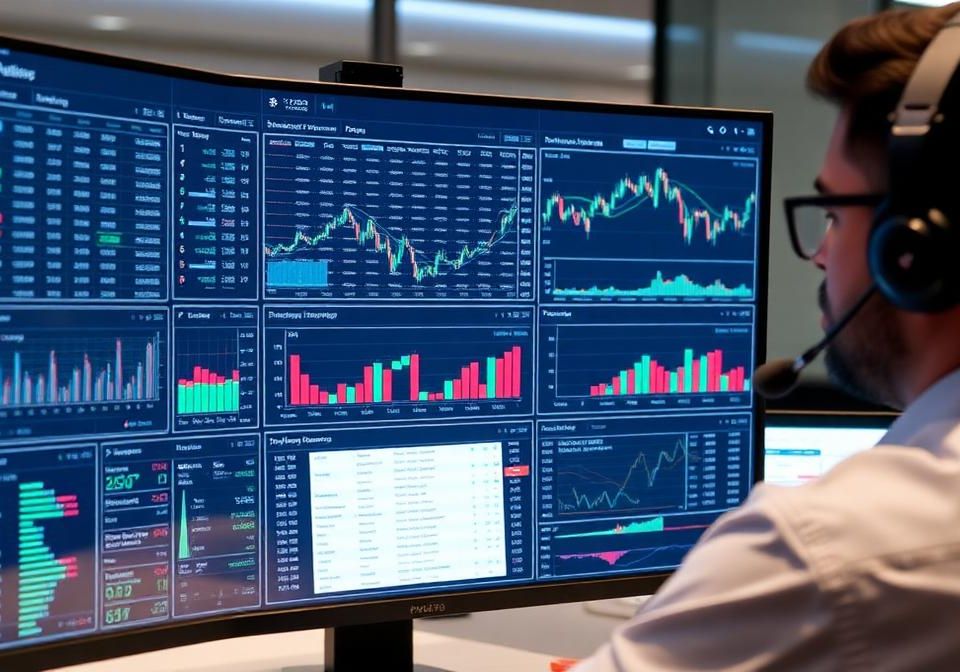
Professional traders use performance dashboards to visualize their trading analytics at a glance. A good dashboard answers key questions immediately:
- Am I profitable this period?
- Is my win rate within normal range?
- How deep is my current drawdown?
- Which setups are performing best right now?
- Am I staying disciplined?
Essential dashboard components:
- **Equity curve** — Visual representation of account growth showing the overall trajectory and drawdown periods. This is often the first thing a trader looks at to gauge overall health.
- **Daily and weekly P&L bars** — Quick identification of profitable and losing periods. These bars can highlight streaks or periods of underperformance.
- **Rolling metrics** — Win rate, expectancy, and profit factor over the last 20, 50, or 100 trades to detect trends. This helps smooth out noise from individual trades and shows the recent performance momentum.
- **Setup breakdown table** — Performance metrics segmented by trade type, as discussed with tagging. This is where the power of tagging becomes evident.
- **Risk utilization** — Current risk exposure compared to planned maximum risk levels. This ensures that the trader is not overexposing their capital, which is crucial for survival.
- **Time of day/week performance** — Displays profitability or loss based on when trades are entered. This can reveal optimal trading windows.
- **Instrument-specific performance** — Shows how different assets (e.g., stocks, forex pairs, commodities) perform under a given strategy, helping to diversify or focus.
The best dashboards update in real time as trades are logged, eliminating manual calculation work. Traders who use dashboards make faster, better-informed decisions because they always have context for their current results. This immediate feedback loop is invaluable for professional trading.
Advanced Strategy Analysis and Drawdown Monitoring
Beyond basic metrics, professional traders use advanced analysis techniques to refine their approach:
- **Time-based analysis** — Breaking down performance by day of week, hour of day, and trading session. Many professionals find they are significantly more profitable during specific windows. For example, a trader might discover they perform best during the first two hours of the New York session and should avoid trading during Asian hours.
- **Market regime analysis** — Categorizing trades by market conditions (trending, ranging, volatile, quiet). This reveals whether your strategy depends on specific conditions. A strategy might be highly profitable in trending markets but completely ineffective in consolidating markets.
- **Instrument analysis** — Comparing performance across different markets or symbols to identify where your edge is strongest. A strategy performing well on EUR/USD might not translate to GBP/JPY. Correlation tools can further enhance this analysis by showing relationships between instruments.
- **Duration analysis** — Correlating trade holding time with profitability. This often reveals that traders hold losers too long and exit winners too early. Optimizing holding periods can significantly impact profitability.
- **Monte Carlo simulation** — Running thousands of randomized sequences of your actual trades to model the range of potential outcomes and worst-case scenarios. This provides a statistical probability distribution of future performance, helping manage expectations and prepare for inevitable losing streaks.
- **Impact of News Events** - Analyzing how trades perform around major economic news releases, often tracked via an economic calendar. Some strategies thrive on volatility from news, while others are best avoided during these periods.
These techniques require a sufficient sample size. Most professionals recommend analyzing at least 100 trades before drawing conclusions. Using a risk reward calculator before entering trades ensures consistent data for post-trade analysis.
Ready to analyze your strategy performance in detail?
Open Your Trading Journal →
*Analyze Setups, Win Rates & Expectancy*
Drawdown management separates professionals from amateurs. Every strategy experiences drawdowns, but how you monitor and respond to them determines whether you survive to trade another day. Ignoring drawdowns can quickly erode capital and lead to forced liquidation.
Critical drawdown metrics:
- **Current drawdown** — How far below your equity peak are you right now? Keeping a constant eye on this prevents complacency.
- **Maximum historical drawdown** — The worst drawdown your strategy has ever produced. This informs risk tolerance and capital requirements. A drawdown calculator can graphically illustrate this.
- **Average drawdown duration** — How long drawdowns typically last before recovery. Understanding this helps manage psychological stress during rough patches.
- **Recovery factor** — Net profit divided by max drawdown. Higher is better. This metric indicates how efficiently a strategy recovers from losses.
Professional risk rules for drawdowns:
- **Daily loss circuit breaker** — Stop trading after losing 1–3% of account in a single day. This prevents emotional overtrading and protects capital from a single bad day.
- **Weekly loss limit** — Reduce size or pause trading after exceeding a weekly loss threshold. This enforces discipline over a longer period.
- **Maximum drawdown rule** — Review and potentially halt strategy if drawdown exceeds a predefined level (often 10–15%). This is designed as a hard stop to prevent catastrophic capital loss and force a pause for reassessment.
Funded trading accounts enforce strict drawdown rules that can result in account termination if violated. Training yourself to monitor drawdowns proactively builds the discipline needed for professional-level performance. This rigorous approach to risk management allows professionals to preserve capital and ensure longevity in the markets.
Evaluating Trading Psychology and Continuous Improvement
Trading performance tracking extends beyond numbers. Professional traders understand that psychology directly impacts execution quality and overall profitability. Emotional biases can undermine even the most robust trading strategies.
Psychological metrics to track:
- **Pre-session emotional state** — Rate yourself 1–10 before trading. Correlate with daily results over time. This helps identify if certain emotional states (e.g., stress, overconfidence) lead to poorer performance.
- **Impulse trade count** — Number of trades taken outside your plan. This measures trading discipline directly. High numbers here indicate a lack of adherence to a structured approach.
- **Revenge trade incidents** — Trades taken specifically to recover a recent loss. Almost always destructive. Tracking these allows a trader to recognize and avoid this common emotional trap.
- **FOMO entries** — Trades entered due to fear of missing out rather than valid signals. These trades often lack proper risk management and can lead to significant losses.
- **Overtrading days** — Sessions where you exceeded your planned trade limit. This can indicate impatience or a desire for action rather than patient waiting for high-probability setups.
- **Adherence to rules** - A simple checklist after each trade or day to confirm fundamental rules (e.g., used stop-loss, calculated position size, followed entry criteria) were followed.
By logging psychological factors alongside trade data, professionals identify the mental states that produce their best and worst results. Many discover that their biggest losing periods stem from psychological triggers rather than strategy failures. Understanding these triggers is the first step toward mitigating their negative impact.
A discipline scorecard rated after each session creates accountability and surfaces patterns that pure financial data cannot reveal. This self-assessment fosters self-awareness and encourages mental resilience, both critical traits for long-term trading success.
The ultimate purpose of trading performance tracking is driving continuous improvement through a structured feedback loop:
- **Collect comprehensive data** — Log every trade with full details including setup, screenshots, and notes. The more granular the data, the richer the insights.
- **Analyze weekly** — Calculate and review metrics every weekend to identify patterns. This regular review prevents problems from festering.
- **Form hypotheses** — Develop specific ideas about what could improve (e.g., "I should avoid trading the first 15 minutes", or "My win rate is higher when I wait for a retest of support"). These hypotheses must be testable.
- **Test one change** — Implement a single adjustment and track results over 20–50 trades. Isolating variables is crucial for accurate analysis.
- **Evaluate impact** — Compare metrics before and after the change with statistical rigor. Did the change lead to a measurable improvement in win rate, expectancy, or profit factor?
- **Standardize or revert** — Add proven improvements to your trading plan or discard changes that did not help. This iterative process ensures the strategy constantly evolves and improves.
The key principle is changing one variable at a time. If you adjust multiple things simultaneously, you cannot isolate which change drove the result. This scientific approach compounds over months and years, building a refined edge that less disciplined traders never achieve. It's the difference between guessing and systematically building a robust trading business.
Analytics Tools Professional Traders Use
Professional traders rely on structured tools rather than spreadsheets or memory for their trading analytics:
- **Trading journals** — Comprehensive trade logging platforms that automatically calculate metrics, generate visualizations, and track performance over time. A good trading journal is the cornerstone of effective performance tracking, providing a centralized hub for all trade data.
- **Risk calculators** — Position size calculators ensure consistent risk management on every trade, producing uniform data for analysis. The risk/reward calculator ensures that potential profits justify the potential losses.
- **Market scanners** — Trading scanners systematically identify setups that match predefined criteria, reducing emotional bias in trade selection. They allow traders to quickly filter through thousands of assets to find those that meet their specific entry conditions.
- **Economic calendars** — Event tracking tools help traders plan around high-impact news releases and avoid unnecessary risk. An economic calendar highlights upcoming announcements that could induce significant market volatility.
- **Currency strength tools** — Strength meters identify directional bias across currencies, adding context to trade decisions, particularly important for forex traders.
- **Compounding Calculators** - Tools designed to project the growth of an account over time, considering reinvested profits. A compounding calculator helps visualize long-term potential and set realistic growth targets.
- **Correlation Tools** - Used to understand the relationships between different assets. A correlation tool helps in portfolio diversification and avoiding unintended overexposure by showing which assets tend to move together or in opposite directions.
The most efficient approach combines these tools into a single integrated platform. Switching between multiple disconnected tools creates friction, increases error rates, and makes comprehensive analysis more difficult. platforms like RockstarTrader aim to provide a holistic solution for all a trader's analytical needs.
Professional **trading performance tracking** is not a luxury—it is a requirement for anyone serious about consistent profitability. It transforms trading from a speculative endeavor into a manageable, improvable business.
Frequently Asked Questions
**How do professional traders track performance?**
Professional traders use dedicated trading journals and analytics dashboards to record every trade with complete details, including entry/exit points, position size, setup type, and psychological notes. They calculate metrics like win rate, expectancy, profit factor, and drawdown weekly, segmenting results by setup type, time, and market conditions to drive continuous improvement. This data-driven approach ensures objective analysis and informed decision-making.
**What trading metrics matter most?**
The most important metrics are expectancy, profit factor, maximum drawdown, and win rate stability. Expectancy tells you whether your strategy has an edge (a positive average return per trade), profit factor measures the efficiency of your strategy by comparing total profits to total losses, and drawdown monitoring protects capital during inevitable losing periods. Win rate stability, especially when segmented by setup, helps confirm the robustness of individual strategies.
**How often should traders review performance data?**
Professional traders review individual trades daily, calculate weekly metrics every weekend, and conduct comprehensive monthly and quarterly reviews. This layered approach ensures both short-term adjustments (e.g., correcting execution errors) and long-term strategic refinements (e.g., optimizing overall strategy allocation) are data-driven. Weekly reviews are crucial for identifying emerging trends or problems, while monthly/quarterly reviews provide a broader perspective on strategy effectiveness.
**What is a trading performance dashboard?**
A trading performance dashboard is a centralized visual display showing equity curves, key metrics, setup breakdowns, and risk data. It allows traders to assess their current performance at a glance and identify trends or problems quickly without manual calculations. Dashboards typically include charts for P&L over time, win rate by market or session, and maximum drawdown graphs, providing instant feedback on overall trading health.
**Why is setup tagging important?**
Setup tagging allows traders to measure the performance of individual strategies independently. Without tagging, profitable and unprofitable setups are mixed together in aggregate data, hiding insights about which approaches should be scaled and which should be eliminated. By assigning specific tags (e.g., "bull flag break", "range bounce") to each trade, traders can precisely identify their most effective strategies and allocate more capital to them, while reducing or removing capital from underperforming ones.
Improve Your Trading Analytics
**Trading performance tracking** transforms trading from guesswork into a data-driven profession. The traders who succeed long-term are those who measure everything, analyze patterns, and make evidence-based decisions.
RockstarTrader provides:
- Trading journals with automatic performance analytics
- Trading calculators such as the Position Size Calculator and Risk/Reward Calculator
- Market scanners and screening tools
- Performance dashboards and equity curve tracking
**Join RockstarTrader Free →**
🎸 Join RockstarTrader Free
RockstarTrader gives you 40+ professional trading tools in one platform — from journaling and performance analytics to risk calculators and market scanners. Everything you need to trade like a professional.
Get Started Free →Conclusion
Professional trading performance tracking is essential for success. It involves systematically recording and analyzing trade data using a variety of metrics that go beyond basic profit and loss, such as win rate, risk-reward ratio, and drawdown. Implementing a tagging system for different trade setups and utilizing performance dashboards helps traders identify profitable patterns and areas for improvement. Continuously monitoring drawdowns and even psychological factors contributes to building discipline and refining one's trading edge. By adopting a data-driven approach and leveraging dedicated analytics tools, traders can transform their trading into a consistent and profitable business, fostering continuous improvement and informed decision-making. This meticulous approach is what separates the consistently profitable from those who struggle, making performance tracking an indispensable part of a professional trader's routine.
Related Resources
- Position Size Calculator: Accurately calculate your position size to manage risk on every trade.
- Trading Journal: Log, analyze, and track your trading performance to identify patterns and improve.
- Risk/Reward Calculator: Determine if the potential reward of a trade justifies its inherent risk before entry.
- Trading Tools: Explore a comprehensive suite of tools designed to enhance your trading analytics.
Ready to level up your trading?
Track, analyze, and improve your trades with RockstarTrader's trading journal.
Start Free Trial