What Is Market Liquidity
Learn the fundamentals of market liquidity, how to measure it via spreads and volume, and why it dictates the success of your trading execution strategy.
Market liquidity is a fundamental concept that every trader, from the novice to the institutional professional, must master to navigate the financial markets successfully. At its core, liquidity dictates how easily you can enter and exit positions without causing a significant change in the asset's price. Whether you are trading stocks, forex, or cryptocurrencies, the level of liquidity available in the market will determine your transaction costs, the speed of your execution, and your overall exposure to risk.
Understanding market liquidity is not just about knowing if a market is "active." It involves analyzing the depth of the order book, the tightness of the bid-ask spread, and the resilience of the price action during periods of high volatility. In this guide, we will explore the nuances of liquidity, the factors that influence it, and how you can use this knowledge to refine your trading strategy and improve your bottom line.
What Is Market Liquidity?
Market liquidity is a measure of how quickly an asset can be converted into cash at a stable price. In high-liquidity markets, a high volume of active buyers and sellers ensures that large trades can be executed with minimal price slippage and narrow bid-ask spreads, maintaining price efficiency.
Access 40+ Professional Trading Tools — No Credit Card Required
The Components of Liquidity: Breadth and Depth
To truly grasp market liquidity, one must look beyond the simple definition and examine its two primary dimensions: breadth and depth. Breadth refers to the number of participants and the volume of orders currently active in the market. In a broad market, such as the EUR/USD pair in forex or blue-chip stocks like Apple, there are thousands of orders resting at various price levels. This ensures that when a trader wants to execute a trade, there is likely a counterparty ready to take the other side immediately.
Depth, on the other hand, refers to the volume of orders available at specific price levels within the order book. A "deep" market can absorb large buy or sell orders without the price moving significantly. For example, if a large institutional investor wants to sell $100 million worth of an asset, a deep market will have enough buy orders sitting near the current market price to absorb that supply. In a shallow market, that same $100 million sell order could exhaust all available buy orders at the current price, forcing the price to drop sharply until it finds new buyers.
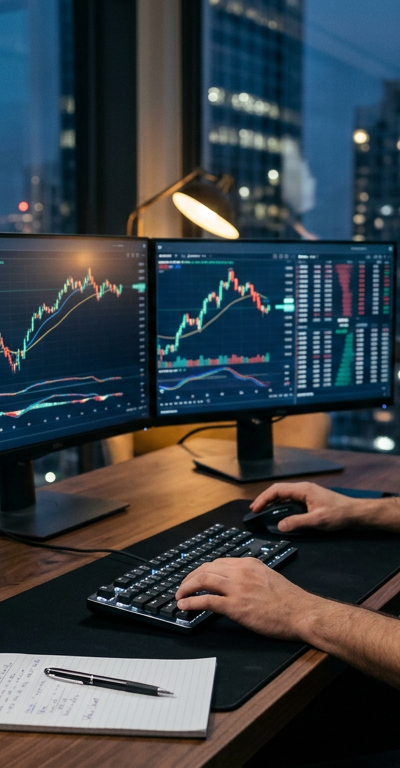
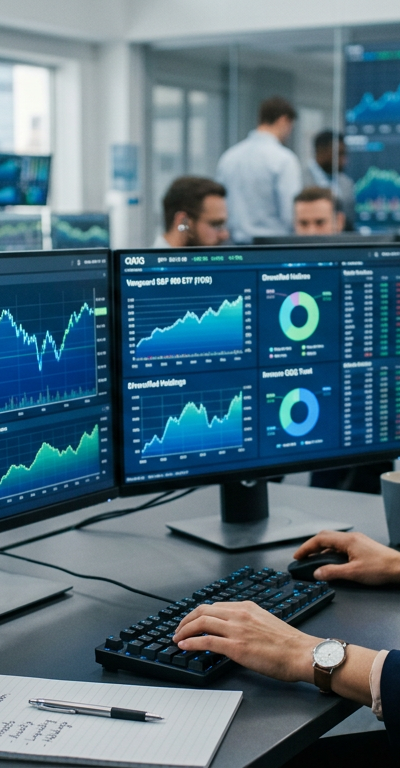
Traders often use the "Level 2" or "Order Book" view to see this depth in real-time. By observing the "bids" (buy orders) and "asks" (sell orders), you can gauge how much liquidity is "resting" in the market. This is a critical skill for day traders who need to ensure they won't get trapped in a position during a sudden move. Knowing how to use a Pivot Calculator can also help identify key levels where liquidity is likely to cluster, as many traders place their orders around these technical points.
Measuring Liquidity: The Bid-Ask Spread
The most common and immediate way to measure market liquidity is through the bid-ask spread. The "bid" is the highest price a buyer is willing to pay, while the "ask" is the lowest price a seller is willing to accept. The difference between these two prices is the spread. In highly liquid markets, the spread is typically very narrow—sometimes just a single "tick" or "pip." In illiquid markets, the spread can be quite wide, representing a significant "hidden" cost of trading.
When you enter a market order, you are essentially paying the spread to the liquidity providers (such as market makers) in exchange for the immediacy of the trade. If you buy, you buy at the ask; if you sell, you sell at the bid. Therefore, in a low-liquidity environment, you start your trade with a larger nominal loss because of the wide gap you must overcome just to reach break-even.
Furthermore, the spread is not static. It fluctuates based on market conditions. During major news releases or periods of extreme uncertainty, liquidity providers may pull their orders back to avoid being caught on the wrong side of a massive move. This causes the spread to "blow out" or widen significantly. Traders who do not account for these shifts may find themselves facing much higher costs than anticipated.
Factors That Influence Market Liquidity
Several factors converge to determine the liquidity level of a specific asset at any given time. The first and most obvious is the type of asset itself. Major currencies and large-cap stocks are inherently more liquid than "exotic" currency pairs or penny stocks because they have a global base of participants, including central banks, hedge funds, and retail traders.
Time of day is another crucial factor. In the forex market, liquidity is highest during the "London-New York overlap," when the world's two largest financial centers are both active. Conversely, during the "Asian session" or around bank holidays, liquidity can dry up significantly. Higher liquidity generally leads to smoother price trends, while low liquidity can lead to "choppy" or erratic price action.
External shocks and economic data also play a role. When a surprise economic report is released, market participants may hesitate to place orders until the implications are clear. This temporary withdrawal of participants creates a "liquidity vacuum," where even a small order can cause a massive price spike. This is why understanding what moves the forex market is essential for timing your entries when liquidity is optimal. Additionally, regulatory changes or shifts in central bank policy can permanently alter the liquidity landscape of a market by changing the incentives for market makers to provide depth.
The Role of Market Makers and High-Frequency Traders
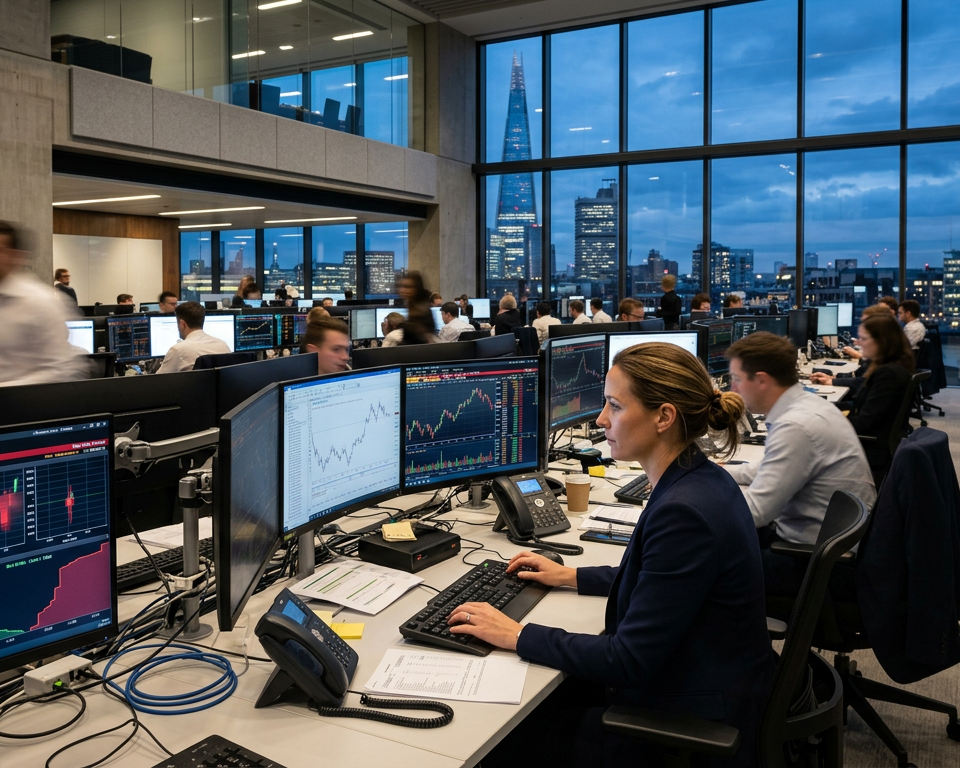
In modern financial markets, liquidity is largely provided by "Market Makers" and High-Frequency Trading (HFT) firms. These are professional participants—often large banks or specialized tech firms—that stand ready to buy and sell assets at all times. They profit from the bid-ask spread and various rebates provided by exchanges. By constantly posting buy and sell orders, they ensure that retail traders can execute trades nearly instantaneously.
🎸 Start Your Trading Journal
Track, Analyze, and Improve Every Trade You Make
However, the presence of HFTs has changed the nature of market liquidity. While they provide high "nominal" liquidity (lots of orders in the book), this liquidity can be "fragile." Because these orders are managed by algorithms, they can be withdrawn in milliseconds if the algorithm detects a high-risk event. This can lead to a "flash crash," where liquidity disappears exactly when it is needed most.
Traders should also be aware of how liquidity interacts with global sentiment. Recognizing these patterns requires a deep understanding of what is market sentiment and how order flow interacts with price action. When sentiment turns bearish, liquidity providers often widen their spreads as a protective measure, which can accelerate a downward move and increase volatility for everyone involved.
Liquidity and the Order Flow Cycle
Market liquidity is not just a static number but part of a dynamic cycle. Liquidity often follows a pattern: accumulation, expansion, and distribution. During accumulation, liquidity is slowly built up as large players enter positions. This is followed by an expansion phase where volume and liquidity spike as the price trends and more participants join in. Finally, distribution occurs where the large players exit their positions into the high liquidity provided by the late-entering retail crowd.
By identifying where you are in this cycle, you can better manage your expectations. Entering during the peak expansion phase offers the best liquidity but may mean you are entering late in the price move. Entering during accumulation offers better price potential but comes with the risk of slow, illiquid price action and wider spreads. Mastering this balance is what differentiates a veteran trader from a novice.
Furthermore, the technological landscape continues to evolve. The rise of decentralized finance (DeFi) and automated market makers (AMMs) in the crypto space has introduced new ways of providing liquidity through "liquidity pools." While these are innovative, they come with their own unique risks, such as "impermanent loss." Regardless of the technology, the fundamental principle remains: someone must be willing to take the other side of your trade, and the price they demand for that service defines the liquidity of that market.
Using Historical Liquidity Data
Historical data can reveal seasonal liquidity patterns. For instance, the month of August is traditionally lower in liquidity for equities as many institutional traders take vacations. Similarly, the "Santa Claus Rally" in late December often occurs on thin liquidity, which can exaggerate price moves. Analyzing how an asset has behaved in terms of volume and spread during these periods in previous years can help you anticipate future conditions.
If you are backtesting a trading strategy, it is vital to include an "adjustment" for liquidity. Many backtests look great on paper because they assume every trade is filled at the exact closing price. However, in the real world, "slippage" and "commissions" would significantly reduce those returns. By factoring in the average bid-ask spread of the asset, you get a much more realistic view of whether a strategy is actually profitable.
Always remember that liquidity is a double-edged sword. While high liquidity makes trading easier and cheaper, it also means the market is more efficient and harder to "beat." In some cases, specialized traders look for "pockets" of mild illiquidity where they can exploit small pricing inefficiencies that haven't been vacuumed up by high-frequency algorithms yet. However, this requires a very high level of skill and an even higher level of risk management.
Summary of Best Practices
To summarize the practical application of liquidity principles:
- Trade major assets during their peak session hours to ensure the narrowest spreads.
- Monitor volume alongside price to confirm the validity of a move; a price spike on low volume is often a "fakeout."
- Use a position size calculator to ensure your exit plan is realistic for the asset's daily turnover.
- Favor limit orders to maintain control over execution costs and avoid unexpected slippage.
- Be cautious during high-impact news events when liquidity providers typically withdraw depth.
- Understand the macro liquidity environment driven by central bank policies.
By respecting the role of liquidity, you protect your capital from the hidden "tax" of wide spreads and ensure that you can always exit the market when your strategy dictates. Liquidity is the lifeblood of the financial markets; without it, the entire system of price discovery and capital allocation would cease to function. As a trader, your job is to stay where the water is deep and the flow is steady.
Frequently Asked Questions
Why does liquidity disappear during major news events?
Liquidity often vanishes during news events because market makers and high-frequency algorithms face immense uncertainty. Since their goal is to profit from a stable spread without taking directional risk, a sudden "price shock" could cause them massive losses. To protect themselves, they withdraw their orders from the book or widen their bid-ask spreads significantly. This creates a "liquidity vacuum," where even small retail orders can cause large, erratic price swings until the market reaches a new equilibrium and participants feel safe enough to return and provide depth once again.
Can a market be too liquid for a retail trader?
While high liquidity is generally good because it lowers costs, extreme liquidity means the market is incredibly efficient. In markets like EUR/USD, thousands of professional analysts and powerful algorithms are competing to find any tiny mispricing. This makes it very difficult for a retail trader to find an "edge." Additionally, highly liquid markets are prone to "algorithmic noise," where prices fluctuate rapidly within a small range as bots compete for orders. While you won't struggle to enter or exit, you may find the competition much tougher than in slightly less liquid markets.
What is the difference between market liquidity and accounting liquidity?
Market liquidity refers to the ability to buy or sell an asset in a financial market quickly and at a stable price. It focuses on the transaction process and the presence of counterparties. Accounting liquidity, on the other hand, refers to a company's or individual's ability to meet their short-term financial obligations with the assets they own. For example, a company with a high "current ratio" has high accounting liquidity because it has enough cash or near-cash assets to pay its upcoming bills. While related, they measure two different aspects of financial health.
How does slippage impact long-term trading profitability?
Slippage acts as a cumulative "drag" on your trading account, much like a hidden fee. Even if the slippage is only a few pips per trade, those costs add up over hundreds of executions. If your average winning trade is 20 pips and you lose 2 pips to slippage on every entry and exit, you are effectively losing 20% of your potential profit. This makes it much harder to maintain a positive expectancy. Over time, high slippage can turn a theoretically winning strategy into a losing one, which is why trading liquid assets is so vital.
Related reading: What Moves the Forex Market.
Conclusion
Mastering the concept of market liquidity is a non-negotiable requirement for professional trading. It dictates your costs, your risks, and the overall feasibility of your strategy. By choosing to trade highly liquid assets, timing your entries for peak market hours, and utilizing tools to manage your position sizing, you place yourself in a position of strength. Remember that the market doesn't owe you a fill at your desired price; you must actively seek out the liquidity you need to succeed. Stay disciplined, monitor the bid-ask spreads, and always have a plan for when the "tide" of liquidity turns.
Everything You Need to Trade Smarter — Start Today
Related Resources
Ready to level up your trading?
Track, analyze, and improve your trades with RockstarTrader's trading journal.
Start Free Trial