Why Journaling Your Trades Is A Game-changer
A deep dive into why journaling your trades is a game-changer for consistency. Explore the psychological and statistical benefits of maintaining a professional trade log.
Success in financial markets is rarely the result of a single brilliant prediction or a "holy grail" indicator. Instead, it is the cumulative result of disciplined execution, risk management, and continuous self-improvement. For many developing traders, the barrier to consistency isn't a lack of technical knowledge, but a lack of objective data regarding their own behavior. This is precisely why journaling your trades is a game-changer for anyone serious about longevity in the markets. By transforming individual market interactions into a structured dataset, you move from gambling to professional speculation and long-term capital growth.
What Is Journaling Your Trades?
Journaling your trades is the structured process of recording every detail of a financial transaction, including entry/exit prices, position sizing, strategic rationale, and emotional state. This practice serves as a comprehensive audit trail, allowing traders to identify recurring behavioral patterns and statistically validate their edge in various market cycles over time.
Access 40+ Professional Trading Tools — No Credit Card Required
The Psychological Shift from Gambler to Professional
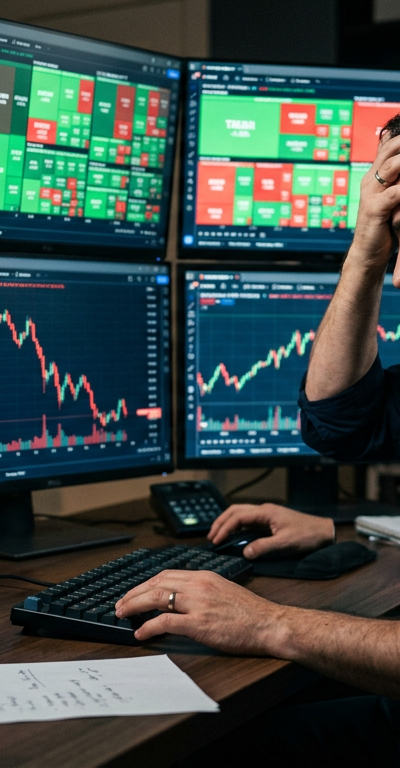
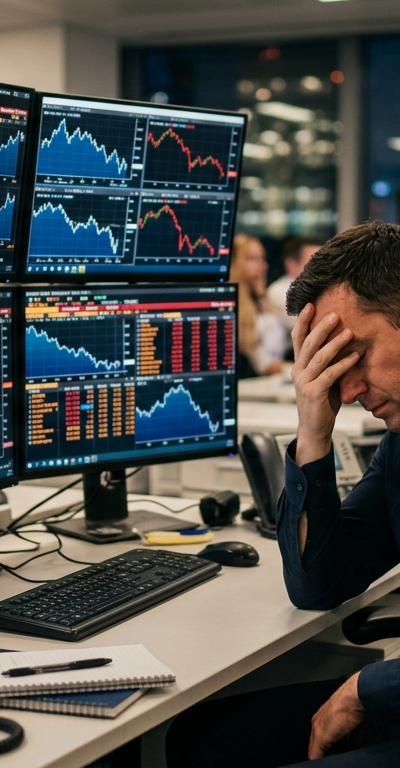
The psychological impact of maintaining a trade log is perhaps the most immediate benefit of the practice. Most retail traders operate in a state of "perpetual present," where the outcome of the last trade dictates their emotional state for the next one. This leads to revenge trading after a loss or overconfidence after a win. When you commit to journaling your trades, you create a buffer between your emotions and your actions. This is one major reason why journaling improves trading performance so dramatically for beginners and veterans alike.
A professional trader views themselves as a business owner. Just as a retail store tracks inventory and sales to understand profit margins, a trader must track their "inventory" of setups. Journaling forces you to confront the reality of your decisions. It is easy to ignore a mistake when it is just a fleeting thought; it is much harder to ignore when it is documented in black and white. This accountability naturally curbs impulsive behavior. You become less likely to take a low-quality "boredom trade" if you know you have to explain that decision to your future self in your journal. This shift in mindset—from seeking excitement to seeking high-quality data—is the foundation of a successful career.
Furthermore, journaling helps in managing the "recency bias." This is a cognitive bias where traders give more importance to recent events than older ones. If you have three losses in a row, your brain might tell you your strategy is broken. However, if your journal shows that over the last 100 trades, that same strategy has a 60% win rate, you gain the psychological fortitude to stay the course. This birds-eye view prevents you from abandoning a profitable system during a standard statistical drawdown.
Developing a Statistical Edge Through Data
In the world of trading, "hope" is not a strategy. To be profitable over hundreds of trades, you must have a statistical edge—an expectancy that ensures your wins are larger or more frequent than your losses. Journaling your trades is a game-changer because it provides the raw data necessary to calculate these metrics. Without a journal, you are merely guessing which setups work. Using a professional Trading Journal allows you to automate this data collection and see your equity curve in real-time.
Key metrics that a journal tracks include:
- Profit Factor: The ratio of gross profits to gross losses.
- Expectancy: The average amount you expect to win (or lose) per trade.
- Maximum Drawdown: The largest peak-to-trough decline in your account balance.
- Win Rate vs. Risk-Reward Ratio: Understanding the interplay between how often you win and how much you win.
By reviewing this data, you can uncover hidden patterns. For example, you might discover that your win rate is 70% during the London session but only 30% during the New York session. Or you might find that you consistently lose money when trading "Breakouts" but excel at "Mean Reversion." This level of granularity allows you to trim the fat from your strategy. Instead of trying to get better at everything, you can simply stop doing what doesn't work and double down on what does. This process of refinement is the fastest path to compounding your capital and reaching a professional level of competence.
The Importance of Qualitative Recording
While the numbers tell you what happened, the qualitative notes in your journal tell you why it happened. A professional journal should include more than just numbers; it should include screenshots of the chart at entry and exit, and a description of your mental state. If you are trading multiple assets, check the Correlation Tool to ensure you aren't unknowingly doubling your risk on correlated pairs, and then note this in your journal entries for future reference.
🎸 Start Your Trading Journal
Track, Analyze, and Improve Every Trade You Make
Did you entry early because you were afraid of missing the move (FOMO)? Did you move your stop-loss to breakeven too quickly because you were scared of a small loss? These emotional observations are gold mines for self-improvement. Most trading errors are not technical; they are behavioral. By documenting your thoughts during the heat of the moment, you can identify "triggers" that lead to poor decision-making. If you find your stress levels are high, it might be an indication that your position size is too large for your current psychological risk tolerance.
For instance, you might notice a pattern where you become reckless after a winning streak. By having this documented, you can create a rule: "After three consecutive wins, I will take a 24-hour break from the markets." This bridge between qualitative observation and concrete rules is what separates the elite from the amateur. It also helps you understand how to audit your own system to ensure you are following your plan regardless of the market environment or current volatility levels.
Identifying and Eliminating Costly Errors
Every trader has "leaks"—recurring mistakes that drain their account balance over time. Common leaks include widening stop-losses, over-leveraging, or "fat-finger" errors. Without a detailed log, these leaks often go unnoticed for months, quietly eroding your profits. Small errors compounded over hundreds of trades can be the difference between a profitable year and a losing one.
Journaling your trades is a game-changer because it makes these errors visible. If you categorize your trades by "Strategy" and "Error," you can run a report at the end of the month. You might find that "impatience" cost you $2,000 this month. Seeing a specific dollar amount attached to a behavioral flaw provides a powerful incentive to change. It translates abstract feelings of frustration into concrete financial consequences that the logical brain can process and address.
Reviewing your journal regularly allows you to see if you are repeating the same mistakes. If you find yourself writing "I chased the price" in your journal for the fifth time in a week, the pattern becomes undeniable. This realization is the first step toward corrective action. You can then implement specific checklists to ensure those errors don't happen again. Avoiding bad trades is often more important than finding great ones when it comes to long-term survival in the financial markets.
The Role of Discipline and Consistency
At its core, trading is a game of probability played over a large sample size. To let the probabilities work in your favor, you must execute your strategy consistently. Journaling is the ultimate tool for measuring that consistency and ensuring you are not deviating from your proven path. If you cannot measure your consistency, you cannot improve it.
If you have a trading plan, your journal should reflect it perfectly. You can even include a "Plan Compliance" score (0-100) for every trade. Did you follow your entry rules? Did you follow your risk rules? If your journal shows high profitability but low plan compliance, you are likely just getting lucky, and that luck will eventually run out. If your journal shows high compliance but low profitability, then the issue lies in the strategy itself, not your execution. This distinction is critical for knowing what to fix.
Distinguishing between "bad trades" (where you followed the plan but lost money) and "bad execution" (where you broke the plan) is vital for your growth. You should never be upset about a losing trade that followed your rules, as that is simply the cost of doing business. You should, however, be concerned about a winning trade where you ignored your risk limits. Journaling keeps you honest about these distinctions. Regular reviews, such as learning how to review your trades weekly like a professional trader, reinforce this discipline and make the habit of journaling second nature.
Detailed Steps to Improve Your Journaling Workflow
To truly unlock the power of a trade journal, you must treat the logging process as an integral part of the trade itself. A trade is not finished when the position is closed; it is only finished once the data is entered and analyzed.
- Capture the Screenshot: Take a snapshot of your chart at the moment of entry. This captures the "live" feeling of the setup before the outcome is known. Take a second screenshot at the exit to see how the price action evolved relative to your expectations.
- Tag Your Strategy: Use specific tags for each trade setup. This allows you to filter your data later to see which specific strategies (e.g., Pullbacks, Reversals, Breakouts) are currently performing best in the current market regime.
- Record the "Why": Write two sentences on why you took the trade. If you cannot explain the logic clearly, it was likely an impulsive decision. This clarity of thought is what builds the neural pathways for professional-grade execution.
- Note Market Context: Was the overall market trending up or down? Was there major news like the FOMC or NFP scheduled for that day? Understanding the environment in which your strategy succeeds or fails is as important as the strategy itself.
- Calculate R-Multiple: Instead of focusing on dollars, focus on "R" (the amount of risk you took). A trade that wins 2R (two times your risk) is a success regardless of the dollar amount. This keeps your focus on the process of risk management rather than the emotional lure of money.
Leveraging Technology for Better Insights
In the modern era, manual spreadsheets are often insufficient for the depth of analysis required to compete with institutional players. Using specialized software can help you visualize your data in ways that are impossible with pen and paper.
For instance, heat maps can show you which days of the week or hours of the day are your most profitable. You might find that you are highly profitable on Tuesdays but consistently lose money on Fridays. Without automated journaling tools, these subtle patterns are nearly impossible to detect. By identifying "The Friday Effect" in your own trading, you could simply stop trading on Fridays and instantly increase your annual return without changing anything else about your strategy.
Furthermore, advanced journaling platforms allow for "backtesting vs. forward testing" comparisons. You can see if your actual live performance matches your theoretical backtested results. If there is a massive discrepancy, it usually points to "slippage," "spreads," or more likely, "execution errors" where you are failing to take the setups you identified in your research. This level of self-honesty is what transforms a struggling amateur into a consistently profitable market participant.
Frequently Asked Questions
How much time should I spend on journaling each day?
You should expect to spend about 5 to 10 minutes per trade for high-quality logging, plus an additional 30 minutes at the end of each week for a deep dive review. While this may seem time-consuming, it is the highest-ROI activity you can perform. Professionals treat journaling as their primary job, as it provides the data needed for every other decision.
Can I just use a simple spreadsheet instead of a tool?
Yes, a simple spreadsheet is better than nothing, but it lacks the automated analytical power of a dedicated trading journal. Spreadsheets often become cluttered and difficult to navigate as your trade history grows into the hundreds or thousands. A dedicated tool provides automatic metric calculations like your Profit Factor and Sharpe Ratio, allowing you to focus on analysis rather than data entry.
What is the most important metric to track in a journal?
While win rate is popular, Profit Expectancy is the most important metric. It tells you exactly how much money you can expect to make for every dollar you risk over a large sample size. This allows you to trade with confidence because you know that even if you lose today, the math is in your favor over the long run.
Should I journal my demo trades as well?
Absolutely. Journaling demo trades is essential for building the habit before real capital is on the line. It also provides the initial data set required to prove your strategy works before you transition to live funds. If you cannot show a positive expectancy in a demo journal, you will almost certainly fail in a live environment where emotions are involved.
How often should I review my past journal entries?
A weekly review is the gold standard for most active traders. This frequency is high enough to remember the context of the trades but low enough to see emerging patterns. Monthly and quarterly reviews are also vital for spotting long-term trends in your performance and adjusting your business plan for the upcoming months based on objective data.
Related reading: How to Review Your Trades Weekly Like a Professional Trader.
Conclusion
In conclusion, journaling your trades is a game-changer because it provides the structure, data, and accountability necessary to succeed in a highly competitive environment. It bridges the gap between where you are and where you want to be by turning every trade into a learning opportunity. By focusing on the process rather than just the profit-and-loss column, you develop the resilience and insight required to navigate any market condition.
A journal is not just a record of the past; it is a roadmap for the future. It allows you to audit your psychology, quantify your edge, and eliminate the behavioral leaks that hold most traders back. Start treating your trading as a professional enterprise today by documenting every move you make. Over time, the insights you gain from your own data will become your most valuable trading asset. Consistency in the journal leads to consistency in the markets.
Related Resources
Everything You Need to Trade Smarter — Start Today
Ready to level up your trading?
Track, analyze, and improve your trades with RockstarTrader's trading journal.
Start Free Trial